
%20(1).jpg)
Working Smarter Together: How Automation Empowers Manufacturers
In today's rapidly evolving industrial landscape, automation has become essential. Yet one question still remains: Are robots replacing human workers, or supporting them? Increasingly, the answer points to support as manufacturing operations continue to expand. Automation isn't about eliminating roles, but rather enhancing them; creating opportunities for people to work alongside technology as collaborative partners. This shift is reshaping how organizations approach productivity, job satisfaction, and long-term growth.
The idea of working with robots rather than like them reflects this change in mindset. When automation is viewed as a partner, it can streamline repetitive tasks, improve efficiency, and allow employees to focus on high-value work. By embracing this collaborative approach, manufacturers can strengthen their workforce while driving better results across their operations.
The Changing Role of Automation in Today's Workforce
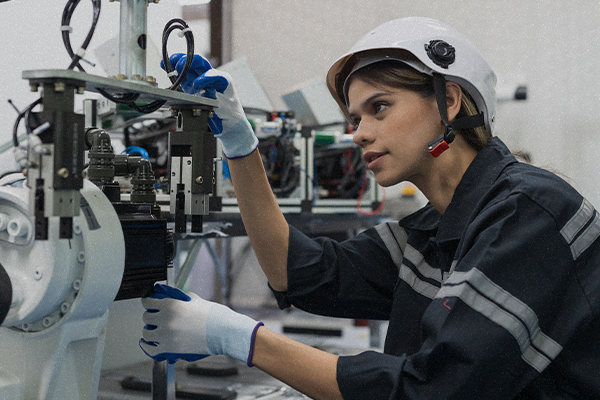
Automation was once seen primarily as a way to replace human labor, often bringing to mind fully automated factory floors with little to no human involvement. Today, especially for small and mid-sized manufacturers, the reality is far more balanced. Modern automation is built around collaboration, with technologies such as collaborative robots, or cobots, designed to work safely alongside employees.
Cobots are equipped with advanced safety features and are typically used for repetitive or physically demanding tasks. This allows employees to shift their focus to more complex, value-driven work. By combining the strengths of both people and technology, manufacturers can increase productivity while still relying on human insight, creativity, and decision-making.
Benefits of Working With Automation
Using automation as a way to enhance the workforce rather than replace it offers several important advantages. These benefits highlight why many industries are embracing a balanced approach that supports employees while improving overall performance.
1. Increased Productivity Without Added Strain
Automation allows companies to improve productivity by assigning repetitive tasks such as sorting, lifting, and assembly work to machines. When these routine responsibilities are handles by robots, employees can focus on higher-level work that requires problem-solving and creativity. This balance supports sustainable growth by maximizing the strengths of both people and technology.
2. A Safer Work Environment
Safety is a top priority in manufacturing environments, especially where heavy equipment, hazardous materials, or physically demanding tasks are involved. By shifting high-risk activities to automated systems, companies can significantly reduce the chance of workplace injuries. This makes automation a valuable partner in protecting employees while maintaining efficiency.
3. Greater Job Satisfaction Through More Meaningful Work
Working alongside automation allows employees to take on a wider variety of responsibilities. As repetitive and physically demanding tasks are reduced, workers can focus on more engaging and skill-building activities. This leads to greater job satisfaction, improved skill development, and a stronger sense of purpose in daily work.
Addressing Automation Concerns: Redefining Roles, Not Replacing Them
While automation often raises concerns about job security, research shows it more commonly transforms jobs rather than eliminates them. Instead of removing roles, automation shifts responsibilities. As machines take on repetitive tasks, the demand grows for skilled workers who can program, operate, and maintain these systems. This creates opportunities for employees to develop new technical skills and move into more advanced, decision-making roles.
Rather than replacing the workforce, automation serves as a tool that enhances how people work. By combining human expertise with robotic support, industries can help employees expand their capabilities, take on more meaningful responsibilities, and grow within an increasingly automated workplace.
How Manufacture Nevada Can Help
At Manufacture Nevada, we help support manufacturers to successfully navigate automation and workforce challenges by providing hands-on guidance, training, and practical solutions tailored to operational needs. Contact our Business Advising team today to get started, and understand how automation can support, rather than disrupt, your small or medium-sized manufacturing business.
Content from this blog is sourced from NJMEP.
.webp)


